+86 13553888868

kikyo@hanbscnc.com
English

Views: 0 Author: Site Editor Publish Time: 2025-10-25 Origin: Site


In precision manufacturing, the Swiss CNC lathe represents the pinnacle of accuracy and efficiency. Designed for small, complex, and high-tolerance parts, these machines rely on dozens of coordinated motions — all controlled to the micron.
At the core of this precision lies one small but critical component: the spindle encoder.
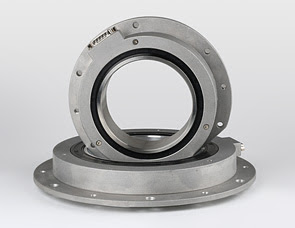
A spindle encoder is a rotary sensor that measures the spindle’s position, rotation speed, and direction.
Mounted on the main or sub-spindle, it provides continuous feedback to the CNC controller. This allows the system to monitor spindle movement in real time, synchronize tool actions, and achieve perfect angular positioning.
Without the encoder, a CNC machine would lose track of the spindle’s exact rotation — making advanced operations such as C-axis milling or rigid tapping impossible.
Swiss-type lathes are designed for multi-axis, multi-tool machining in a single setup. To maintain coordination between all these axes, the control system must always know the spindle’s exact angular position. That’s why spindle encoders are vital for:
C-Axis Positioning
Enables the spindle to act as a controlled rotary axis during milling, drilling, or engraving. The encoder provides angular feedback for precise contouring.
Rigid Tapping
Ensures perfect synchronization between spindle rotation and tool feed rate. This allows accurate thread cutting without the need for floating holders.
Spindle Synchronization
During part transfer between main and sub-spindle, both spindles must rotate in perfect phase. Encoders on each spindle provide real-time feedback to align rotations.
Closed-Loop Speed Control
Encoder data allows the drive system to adjust torque and maintain stable RPM, even under changing cutting loads.
In short, the encoder is the brain’s eyes — it tells the control exactly what the spindle is doing, ensuring precision at every step.
Swiss CNC lathes can use either incremental or absolute spindle encoders. Understanding the difference helps in selecting the right system for your machine.
Output A/B/Z pulse signals that represent relative movement.
The control counts pulses to calculate position and speed.
Cost-effective and common in older or entry-level Swiss lathes.
Require homing after power-up since position data resets when powered off.
Assign a unique digital code to each angular position.
Remember position even when power is lost.
Eliminate the need for homing, reduce startup time, and improve reliability.
Standard in modern high-end Swiss CNC lathes using Fanuc 31i or Mitsubishi M800 controls.
In summary:
Incremental encoders are simpler and cheaper, while absolute encoders deliver superior accuracy, convenience, and performance — ideal for advanced Swiss machining centers.
Different Swiss CNC manufacturers partner with different encoder suppliers depending on control compatibility. The most common brands include:
Brand | Series | Interface | Common Use |
Heidenhain | ERN / ECN / ECI | TTL, EnDat, SSI | High-end precision lathes (Fanuc, Siemens) |
Tamagawa | OIH / TS | A/B/Z or Serial | Mitsubishi-based Swiss lathes |
Fanuc | αi Series (built-in) | Serial | Fanuc control systems |
Yaskawa | SGM Series (integrated) | Serial | Machines with Yaskawa drives |
Modern lathes often feature integrated motor encoders, where the encoder is built directly into the spindle motor. This design minimizes mechanical play, improves resolution, and enhances stability during high-speed operation.
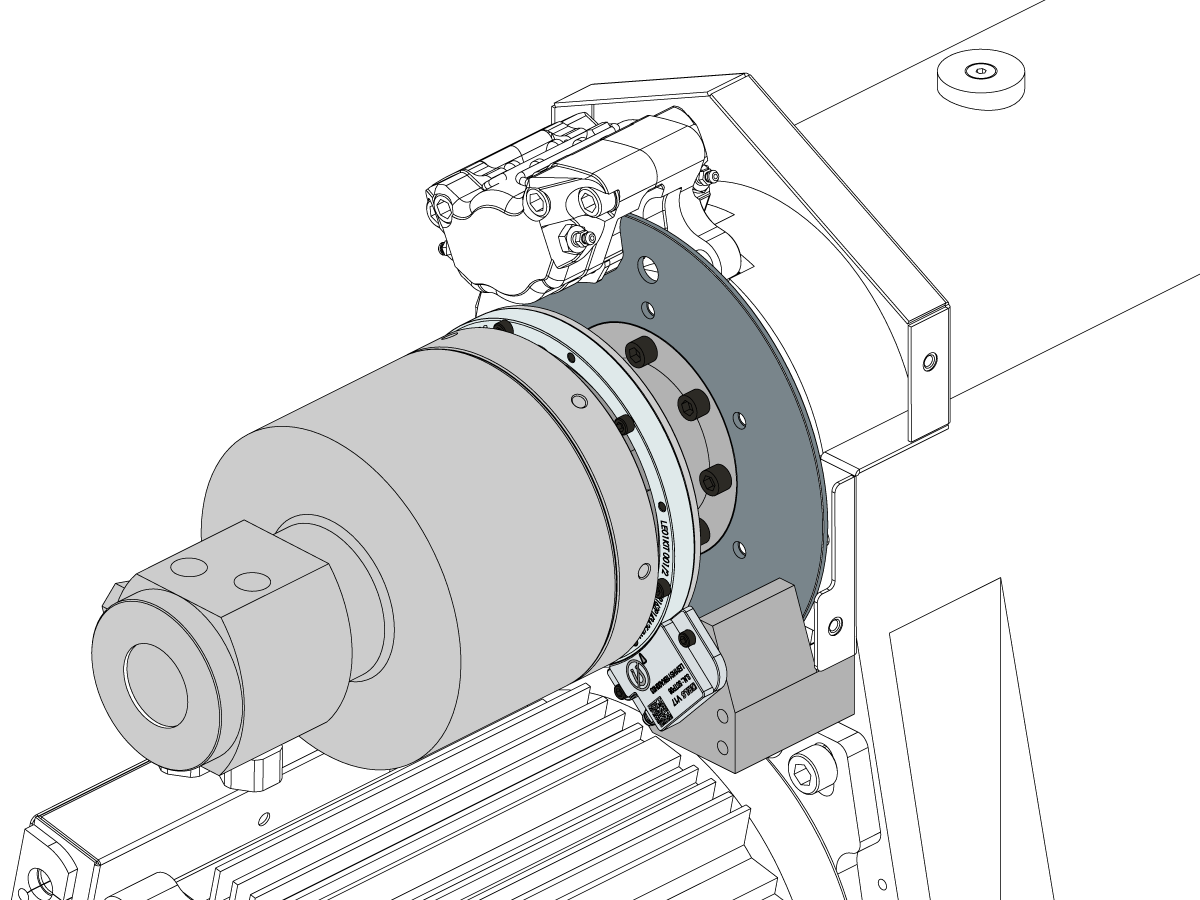
You can determine your spindle encoder type in several ways:
Electrical diagrams – the encoder model is often listed on wiring schematics.
Motor nameplate – integrated encoder specifications are printed here.
Control manuals – Fanuc, Mitsubishi, or Siemens documents identify supported encoders.
Manufacturer inquiry – your machine builder or dealer can confirm the exact model.
Knowing your encoder type is useful for troubleshooting, ordering replacements, or upgrading to higher-resolution versions.
As the manufacturing world moves toward Industry 4.0, spindle encoders are evolving beyond simple feedback devices.
Recent developments include:
Higher-resolution sensing for sub-micron angular accuracy.
Digital communication interfaces (e.g., EnDat 3, BiSS-C) for faster, noise-resistant data transfer.
Thermal compensation and vibration monitoring integrated into the encoder.
Predictive maintenance capabilities that use encoder data to detect spindle imbalance or bearing wear.
These innovations turn encoders into smart sensors — vital for next-generation automated, connected, and data-driven Swiss CNC systems.
In every Swiss CNC lathe, the spindle encoder plays a central role in achieving world-class precision.
By providing accurate spindle position and speed feedback, it enables C-axis control, rigid tapping, spindle synchronization, and real-time process stability.
Both incremental and absolute encoders serve valuable roles, but absolute designs are now the standard for high-end, multi-axis Swiss machines.
Whether integrated into the spindle motor or mounted externally, the encoder remains the silent hero of precision machining.
As CNC technology advances, spindle encoders continue to evolve — supporting faster, smarter, and more reliable Swiss machining performance for the future.