+86 13553888868

kikyo@hanbscnc.com
English

Views: 0 Author: Site Editor Publish Time: 2025-11-05 Origin: Site


A Swiss CNC lathe—also known as a Swiss-type automatic lathe or sliding-head lathe—is a high-precision machining tool designed for producing small, complex components. It is widely used in industries such as electronics, medical devices, watchmaking, and aerospace, where tight tolerances and smooth finishes are critical.
Unlike conventional lathes, a Swiss-type machine features a moving headstock and a guide bushing that support the workpiece very close to the cutting tool. This design minimizes deflection, enhances rigidity, and enables the production of long, slender parts with exceptional accuracy.
In such precision-driven systems, even the smallest assembly misalignment can lead to machining errors. That’s why the locating pin, though small and often overlooked, plays a vital role in maintaining the geometric accuracy and repeatability of the machine.
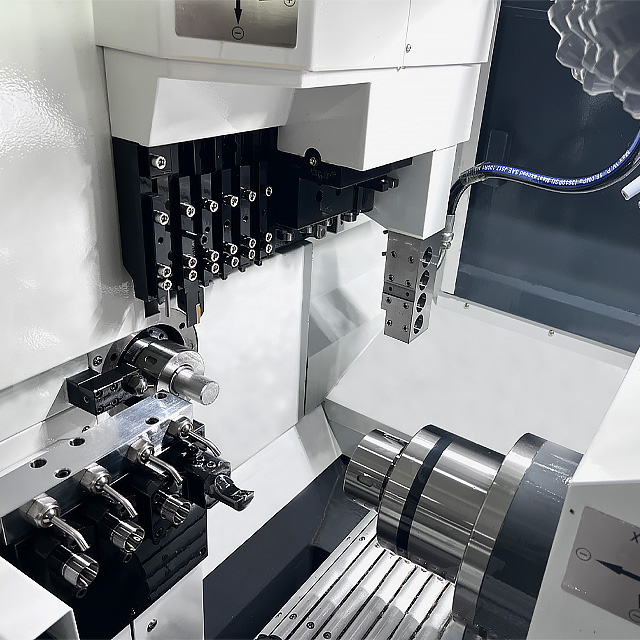
A locating pin (also called a dowel pin) is a small, hardened steel pin used to ensure precise alignment between two mating components. In mechanical assemblies, locating pins define the exact position and orientation of parts, ensuring that every setup returns to the same reference point.
In a Swiss CNC lathe, locating pins serve several essential functions:
1.Provide a Fixed Assembly Reference
They ensure accurate alignment between critical machine components—such as the main spindle, sub spindle, collet holder, guide bushing housing, and tool post—so each reinstallation restores the same precise position.
2.Prevent Rotation or Slippage
Many mating surfaces, like spindle flanges or chuck seats, are circular and may rotate slightly under cutting loads or vibration. The locating pin prevents such rotation, maintaining stability and positional accuracy.
3.Enhance Repeatability
During maintenance or setup changes, components are frequently removed and reinstalled. Locating pins guarantee that each component returns to its exact original position, preserving repeatable accuracy without recalibration.
The main spindle is the heart of the Swiss CNC lathe, responsible for driving the workpiece during machining. The locating pins mounted between the spindle nose and components such as the collet chuck seat or guide bushing holder serve key functions:
Maintain perfect concentricity between the spindle axis and the guide bushing;
Ensure the collet or chuck is mounted at a consistent angular position;
Prevent misalignment caused by thermal expansion or vibration;
Allow quick and precise reassembly after maintenance or tooling changes.
Even a tiny angular or axial shift in the main spindle assembly can directly impact part geometry, leading to issues such as poor surface finish, dimensional drift, or chatter during cutting.
The sub spindle (or secondary spindle) handles back-end operations, part pick-off, or transfer machining. Locating pins here are equally critical because they:
Guarantee alignment between the sub spindle collet center and the main spindle axis;
Maintain accurate part transfer during hand-off operations;
Ensure repeatable positioning for secondary machining or finishing cuts.
When the main and sub spindles are not perfectly aligned, part transfer can result in clamping offset, scratches, or even dropped workpieces. Locating pins eliminate these risks by keeping both spindle centers precisely matched.
To ensure long-term accuracy and reliability, locating pins in Swiss CNC lathes must be installed and maintained carefully. Below are several key recommendations:
1.Keep Locating Holes Clean
Before inserting the pin, clean the locating holes thoroughly. Even a small chip or burr can affect alignment and reduce positioning accuracy.
2.Use the Correct Fit
Locating pins are usually installed with a transition or light press fit. They must be tight enough to prevent movement but not so tight that removal causes damage.
3.Avoid Damage During Removal
Always use the proper extraction tools. Hammering or prying can deform holes and compromise repeatability.
4.Maintain Matching Geometry When Replacing Components
If the collet seat, guide bushing housing, or spindle face is replaced, the new part must have locating holes machined to the same coordinates as the original.
5.Inspect for Wear
Over time, vibrations and frequent disassembly can cause minor wear. Replace worn pins promptly to preserve long-term accuracy.
In precision machining, accuracy is cumulative—the precision of each component affects the overall outcome. Locating pins are fundamental elements in maintaining that precision.
Here’s how properly installed locating pins contribute to better performance:
Reduced Setup Time – Components realign automatically without repeated adjustments.
Improved Dimensional Consistency – Elimination of micro-shifts keeps tolerances stable.
Enhanced Machine Longevity – Stable assemblies reduce vibration and wear.
Higher Productivity – Faster fixture swaps and maintenance cycles.
Though they are inexpensive and simple, locating pins have a high leverage effect on process stability, repeatability, and long-term cost efficiency.
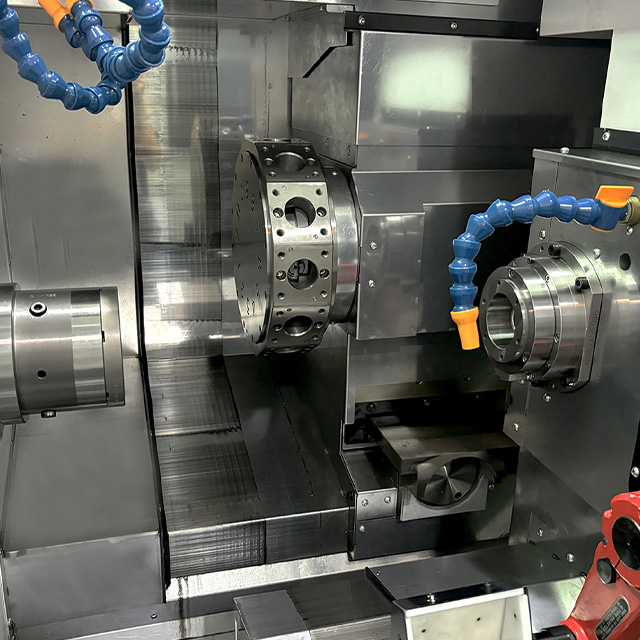
In a Swiss CNC lathe, the locating pin is far more than a small piece of hardware—it’s a precision reference that underpins the entire machine’s accuracy.
Whether positioned on the main spindle, sub spindle, or guide bushing holder, locating pins ensure every component stays exactly where it should be—aligned, concentric, and repeatable.
By understanding and maintaining these small but essential components, manufacturers can safeguard machining quality, extend machine life, and achieve consistent performance across every production run.